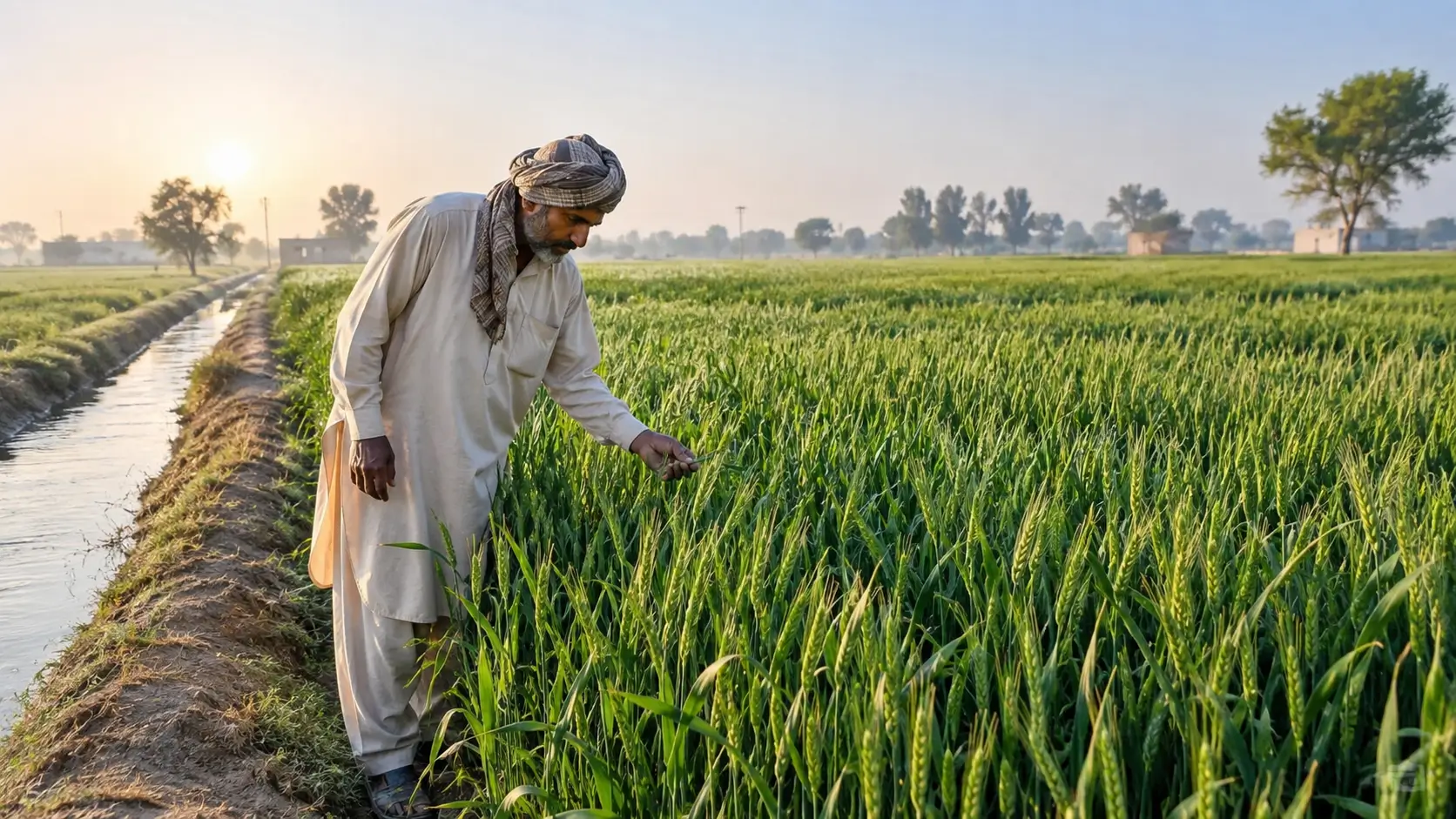
Farming in Pakistan has always depended heavily on experience, weather, water availability and timely decisions. But today, farmers are dealing with new challenges at the same time: unpredictable weather, water shortages, rising input costs, crop diseases and the need to produce more from the same land.
This is where AI in agriculture in Pakistan is becoming an increasingly important topic.
Artificial intelligence, satellite imagery, sensors, drones and digital farming tools are being developed to help farmers understand their fields more accurately and make better-informed decisions. For farmers looking to improve crop productivity, choosing the right agricultural seeds is still one of the most important starting points.
But what does AI farming actually mean for an ordinary farmer?
Let’s make it simple.
What Is AI in Agriculture?
AI in agriculture means using computer systems and agricultural data to identify patterns, predict possible problems and support farming decisions.
Instead of depending only on visual inspection or a fixed farming routine, AI-based systems can process information such as:
Weather conditions
Soil moisture
Crop images
Satellite data
Crop growth patterns
Irrigation information
Historical farm data
Pest and disease symptoms
The purpose is not necessarily to replace farmers.
Instead, the goal is to give farmers additional information that can help them make decisions at the right time.
For farmers who are already focusing on better crop planning and seed selection, AI can add another layer of useful information to the farming process.
Why Is AI Farming Becoming Important in Pakistan?
Pakistan’s farmers face several practical challenges.
Water availability can vary. Weather patterns are becoming harder to predict. Input costs can increase, while crop diseases and pest attacks can reduce production if they are not identified early.
This is why modern farming techniques are becoming increasingly important.
Farmers can combine traditional experience with better information about soil, weather, crops and field conditions. This approach can be particularly useful for major crops such as wheat, rice, maize and other crops commonly grown across Pakistan.
For example, farmers interested in wheat production can also explore our detailed guide on wheat farming in Pakistan to understand the broader factors that influence crop performance.
How AI Can Help With Crop Monitoring
One of the most practical applications of AI is crop monitoring.
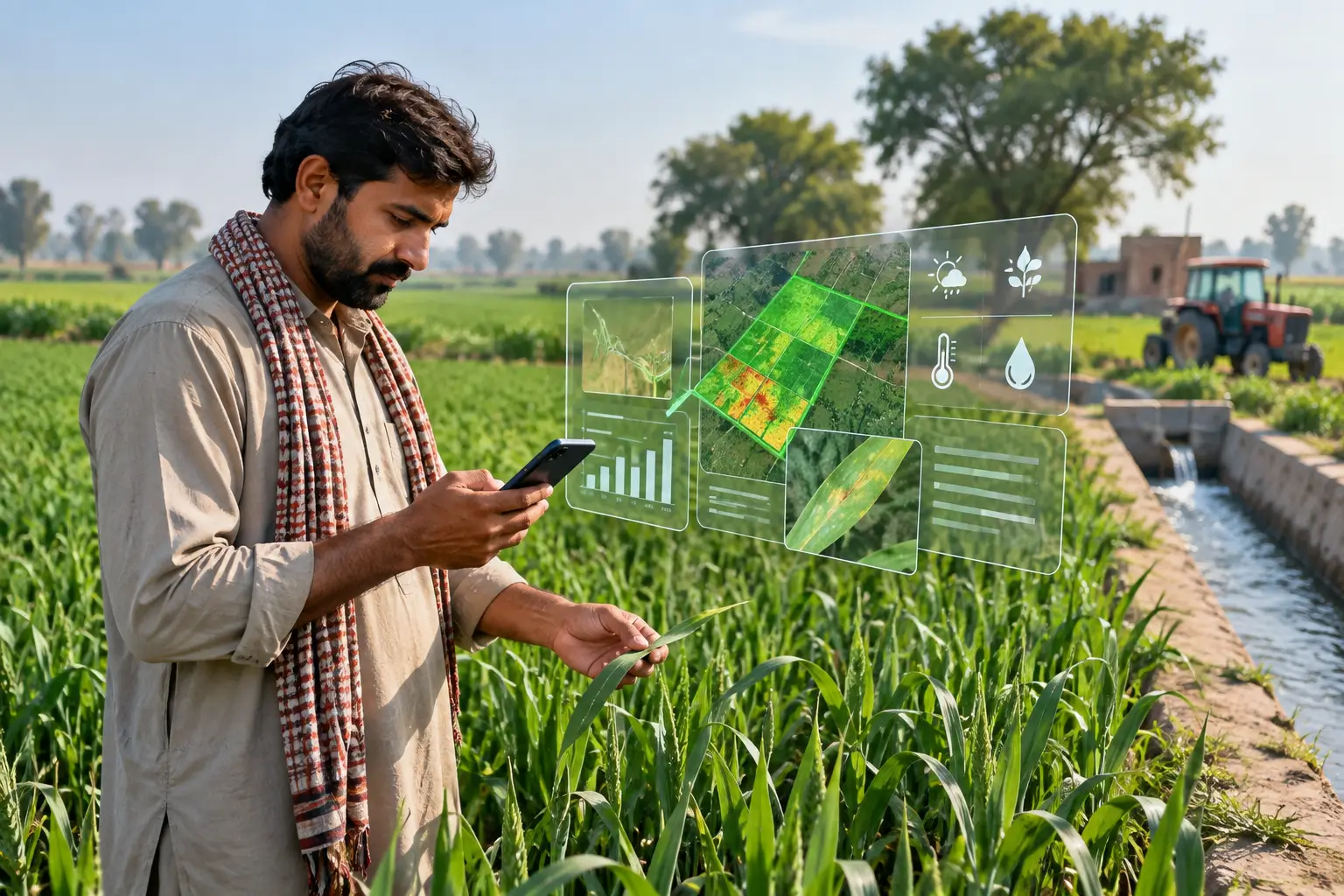
Farmers can use images from smartphones, drones or other cameras to examine crop conditions. AI-based image-recognition systems can then help identify patterns associated with diseases, nutrient problems, water stress or abnormal plant growth.
For example, if a particular section of a field starts showing unusual symptoms, technology can help identify that area earlier instead of waiting until the entire field shows visible damage.
This can make crop monitoring more efficient and help farmers focus their attention on areas that may require closer inspection.
However, AI should not replace physical field inspection. Field history, crop stage, weather conditions and professional agricultural advice can still be important when identifying serious crop problems.
Smart Irrigation and Water Management
Water management is another area where smart farming can make a difference.
Traditional irrigation decisions may sometimes follow a fixed schedule. But crop water requirements can change depending on temperature, soil moisture, crop stage and weather.
Smart irrigation systems can combine these types of information to help determine when irrigation may be required.
For Pakistani agriculture, this is particularly relevant because efficient water management is becoming increasingly important.
Instead of applying the same amount of water everywhere, smart farming systems can help farmers understand where water may be needed and when irrigation could be most useful.
This approach can support better resource management while helping farmers make irrigation decisions based on actual field conditions.
AI for Crop Disease and Pest Detection
Crop diseases can become expensive problems when they are detected too late.
AI-powered image analysis is being researched for identifying disease symptoms from crop photographs. Farmers can potentially use these systems as an early warning or decision-support tool.
This can be particularly useful when symptoms appear in small areas of a field.
For example, a farmer might notice:
Yellowing leaves
Spots on leaves
Wilting
Unusual plant growth
Insect damage
Patchy crop development
An AI system can help analyze the visible pattern and suggest possible causes that the farmer can investigate further.
However, farmers should avoid treating crops based solely on an AI-generated suggestion. Correct identification, appropriate agricultural guidance and proper product usage remain important.
Can AI Help Farmers Use Fertilizer More Efficiently?
Yes, this is another important area of smart agriculture.
AI systems can analyze soil information, crop requirements, previous field data and other variables to support fertilizer recommendations.
The objective is not simply to use more fertilizer.
It is to understand whether a crop actually needs a particular nutrient and where an application may be appropriate.
Better information can potentially help farmers avoid unnecessary applications while making more informed decisions about crop nutrition.
This is especially important when farmers are trying to improve productivity while managing increasing farming costs.
Choosing suitable seeds and agricultural inputs is also an important part of building an efficient crop-production strategy.
AI, Weather and Better Farm Decisions
Weather can change farming decisions quickly.
Rainfall, temperature, humidity, wind and extreme weather can influence irrigation, sowing, spraying and crop health.
AI and agricultural data systems can combine weather information with crop and field information to provide more useful decision support.
This is one reason digital agriculture is moving beyond simple weather forecasting.
The larger goal is to connect weather, crop, soil and field information so farmers can make decisions based on the complete situation.
For example, understanding seasonal crop patterns can help farmers plan ahead. Farmers can also review seasonal recommendations such as our guide to crops to grow in August in Pakistan when planning suitable crops for the season.
Does AI Replace a Farmer?
No.
AI should be viewed as a decision-support technology rather than a replacement for farming experience.
A farmer understands the land, crop history, irrigation system and local conditions in ways that a computer may not fully understand.
The most useful approach is often a combination of:
Farmer experience + agricultural knowledge + reliable data + technology.
Technology can help farmers identify patterns, but farmers still make the practical decisions based on their land and circumstances.
This combination of traditional agricultural knowledge and modern technology is likely to become increasingly important as farming becomes more data-driven.
What Does the Future of Smart Farming Look Like in Pakistan?
The future of farming is likely to become increasingly connected and data-driven.
Farmers may have access to technologies that combine:
Satellite imagery
AI crop monitoring
Soil sensors
Weather data
Drone imagery
Smart irrigation
Digital farm records
Disease detection
Crop forecasting
These technologies can potentially make farming decisions more precise and help farmers respond to problems earlier.
But technology only becomes useful when it solves a real farming problem.
For Pakistani farmers, the most valuable applications will likely be those that make everyday decisions easier: when to irrigate, what to monitor, when a crop may be under stress, how to identify a possible disease early and how to use farm inputs more responsibly.
How Farmers Can Start Using Smart Farming
Farmers do not necessarily need to completely change their farming system overnight.
A practical approach is to start with simple technology and gradually introduce more advanced tools.
For example, farmers can begin by monitoring weather information, maintaining digital records of their fields, taking regular crop photographs and tracking irrigation and fertilizer applications.
As technology becomes more accessible, farmers can then explore soil sensors, satellite monitoring, AI-based crop analysis and other precision agriculture tools.
The important thing is to choose technology based on a real farming requirement rather than using technology simply because it is new.
Final Thoughts
AI in agriculture is no longer just a futuristic concept.
Technology is increasingly being developed for crop monitoring, smart irrigation, disease detection, fertilizer recommendations and precision farming.
For Pakistan, where farmers face pressure from water availability, climate variability and rising production costs, these technologies can become an important part of modern agricultural decision-making.
However, technology should work with farmers, not replace their experience.
The future of farming may therefore not be about choosing between traditional farming and technology. It may be about combining local agricultural knowledge with better data, better monitoring and smarter decision-making.
For farmers in Punjab and across Pakistan, that could mean making each decision with more information and potentially using every drop of water, every input and every acre more efficiently.
At Mehar Agro, the focus is on helping farmers make informed agricultural decisions through quality seeds, farming knowledge and practical support.