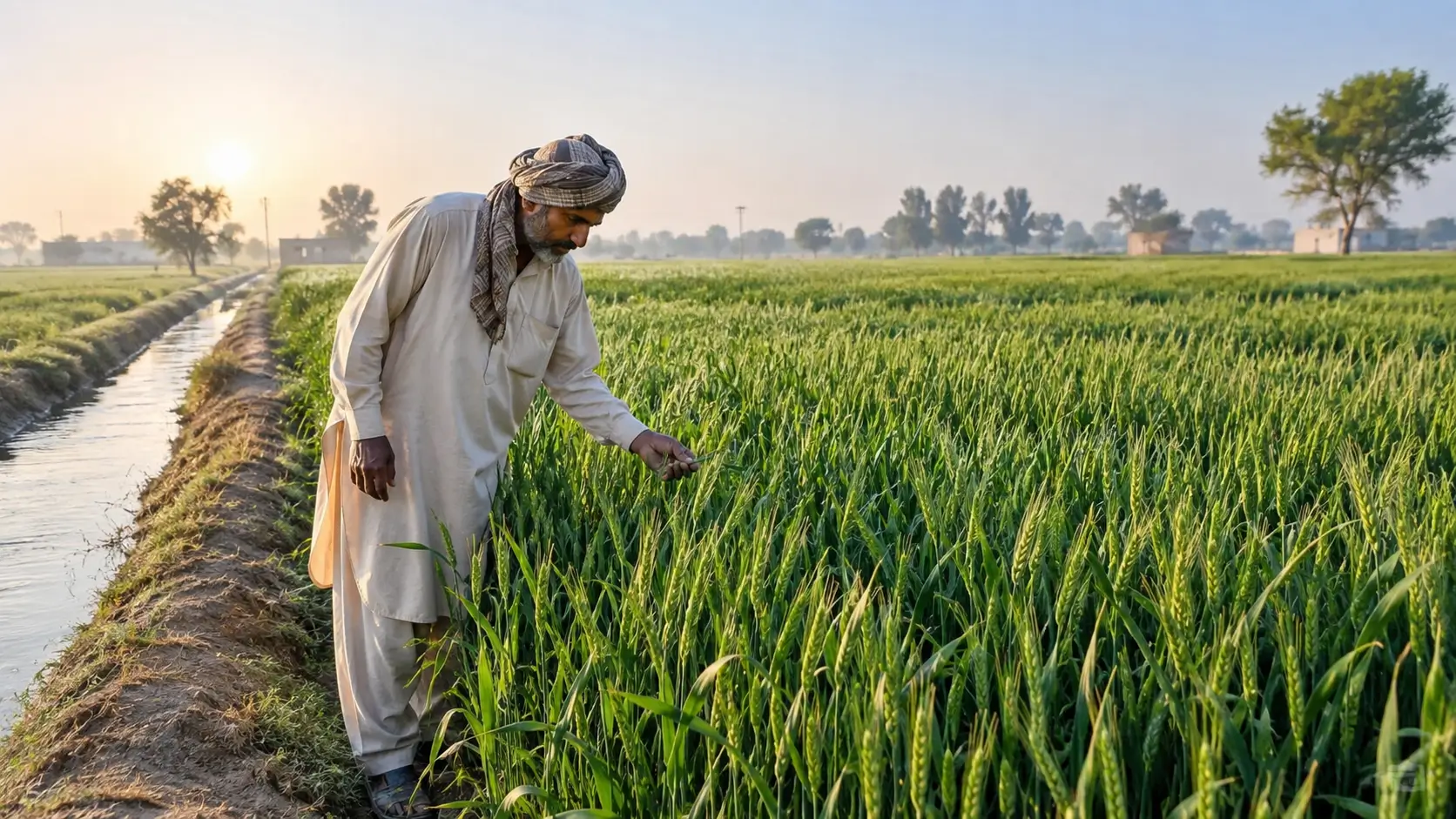
Wheat farming in Pakistan is an important part of agriculture and rural life. For thousands of farmers, wheat is not only a major food crop but also an important source of seasonal income. However, getting a good wheat crop is not simply about putting seed into the soil and waiting for harvest. The right seed, sowing time, soil preparation, irrigation, nutrition and crop monitoring all play an important role.
Farmers in Punjab and other wheat-growing areas need to make decisions according to their local soil, water availability, weather conditions and previous crop. A method that works well on one farm may not always produce the same results somewhere else.
That is why proper planning before sowing can make a major difference in wheat production.
Why Wheat Farming Is Important in Pakistan
Wheat is one of Pakistan’s most important food crops. Punjab is particularly important for wheat production, with both irrigated and rain-fed farming areas contributing to the country’s wheat supply.
For farmers, wheat production starts well before sowing. Selecting suitable seed, preparing the field and planning irrigation can help establish a stronger crop from the beginning.
Farmers planning their next wheat crop can also explore Mehar Agro’s agricultural seed options and consider the suitability of different seed choices according to their farm conditions.
Best Time for Wheat Sowing in Pakistan
Sowing time is one of the most important factors in wheat production.
In Punjab, the suitable sowing period can vary depending on the area, variety and farming conditions. Farmers should avoid relying on one date for every location and instead consider local recommendations, soil moisture and the characteristics of the selected variety.
Late sowing can affect crop development and yield potential because the plant may experience less favourable conditions during important growth stages.
Before purchasing seed, farmers can explore Mehar Agro’s Seed Selection and Sowing Support to consider crop suitability, sowing requirements, field conditions and water availability.
Choosing the Right Wheat Seed
There is no single wheat variety that is automatically the best choice for every farmer in Pakistan.
Seed selection should consider:
- Local climate
- Soil type
- Irrigation availability
- Sowing date
- Expected maturity period
- Disease resistance
- Expected production
- Previous crop
- Local farming conditions
A variety that performs well in one area may not necessarily be the right option for another farm.
Farmers should also purchase seed from a reliable source and pay attention to seed quality, storage conditions and crop suitability.
Mehar Agro provides seasonal crop seed options and practical guidance to help farmers make more informed decisions before sowing. You can explore Mehar Agro’s seed and agricultural solutions before planning your wheat crop.
Preparing the Field for Wheat
Good field preparation helps create suitable conditions for wheat seed germination and early crop establishment.
The field should have appropriate soil moisture, a reasonably level surface and good conditions for root development. Poor leveling can create uneven water distribution, while compacted soil can affect root growth and crop establishment.
Farmers should also consider the previous crop when preparing the field. Crop residues, weeds, soil condition and available moisture can all influence the next wheat crop.
Rather than following the same field preparation method every season, farmers should look at the actual condition of their land before sowing.
Wheat Fertilizer Management
Fertilizer management is another major factor in wheat farming.
Applying more fertilizer does not necessarily mean producing more wheat. Excessive or poorly timed fertilizer application can increase production costs and may create nutrient imbalance.
Farmers should ideally use soil information and local agricultural recommendations when deciding fertilizer requirements.
Nitrogen, phosphorus and potassium all have important roles in crop development, but their requirement depends on soil fertility, previous crop, expected yield and other field conditions.
Organic matter can also play an important role in maintaining soil quality. Improving soil structure and fertility over time can support healthier crop development and better use of available nutrients.
Irrigation Management for Wheat
Water management is essential throughout wheat production.
Farmers should avoid treating irrigation as a fixed schedule that never changes. Soil type, weather, crop growth stage and previous rainfall can all affect irrigation requirements.
Too little water can cause crop stress, while unnecessary irrigation can increase costs and may contribute to waterlogging or nutrient loss.
Before irrigating, farmers should consider the actual moisture condition of the field.
Weather conditions should also be considered before major farm operations. Farmers can explore Mehar Agro’s Weather and Farm Risk Updates when making weather-sensitive farming decisions.
Weed Management in Wheat Fields
Weeds compete with wheat plants for water, nutrients, sunlight and growing space.
Early weed monitoring is therefore important. Farmers should regularly inspect their fields and identify problem areas rather than waiting until weeds become widespread.
Farmers should avoid spraying a product simply because weeds are visible. The correct approach depends on the weed species, crop stage, field condition and locally approved management options.
Good crop establishment and proper field management can also help reduce weed competition.
Wheat Disease and Pest Management
Crop monitoring should continue after germination.
Farmers should regularly check for:
- Yellowing leaves
- Leaf spots
- Wilting
- Unusual plant growth
- Insect damage
- Weak crop patches
- Poor tillering
- Changes in plant colour
One visible symptom can have several possible causes. For example, yellowing may be associated with nutrition, water stress, disease, root problems or other field conditions.
This is why blind spraying is not always the best solution.
If a wheat crop develops unusual symptoms, farmers can explore Mehar Agro’s Crop Health and Pest Advisory for practical crop guidance.
How to Increase Wheat Yield Per Acre
Improving wheat yield does not depend on a single fertilizer, seed or product. It is the result of several farming decisions working together.
Farmers can focus on:
- Selecting suitable and quality seed.
- Sowing within the appropriate local window.
- Preparing and leveling the field properly.
- Maintaining suitable soil moisture.
- Using balanced crop nutrition.
- Managing weeds at the appropriate stage.
- Monitoring crop health regularly.
- Adjusting irrigation according to field conditions.
- Monitoring weather before sensitive field operations.
- Keeping records of crop activities and input use.
Keeping simple records can be especially useful. Farmers can record the seed variety, sowing date, irrigation dates, fertilizer applications and major weather events. These records can help identify what worked well and what needs improvement in the following season.
Common Wheat Farming Mistakes
Choosing Seed Only by Price
The cheapest seed is not always the most suitable seed. Farmers should consider variety, maturity, local suitability and seed quality.
Sowing Without Checking Soil Moisture
Poor moisture conditions can affect germination and early establishment.
Applying Too Much Fertilizer
More fertilizer is not automatically better. Nutrient management should be based on crop and soil requirements.
Irrigating on a Fixed Schedule
Weather and soil moisture can change. Farmers should assess actual field conditions before irrigation.
Spraying Without Identifying the Problem
Different problems can produce similar symptoms. Proper identification should come before input selection.
Ignoring Weather Conditions
Rain, heat, wind and humidity can affect crop management decisions. Weather-aware farming can help farmers make better decisions about irrigation, spraying and other field operations.
When Should Farmers Seek Crop Guidance?
Farmers should consider getting agricultural guidance when they notice unusual crop symptoms, poor germination, uneven crop growth, sudden pest activity, water-related problems or uncertainty about seed selection.
Mehar Agro’s agriculture advisory services can help farmers with practical areas such as crop planning, seed selection, sowing, crop health and seasonal farm decisions.
Final Thoughts
Successful wheat farming in Pakistan requires planning from the beginning of the season. Selecting suitable seed, preparing the field properly, sowing at the right time and managing water and nutrients carefully can help farmers establish a healthier crop.
Regular field monitoring is equally important. Problems related to weeds, pests, diseases, nutrition or water are generally easier to manage when they are noticed early.
Most importantly, farmers should make decisions according to their own field conditions rather than following one farming formula for every situation.
For farmers looking for practical support with seed selection, sowing, crop health and seasonal farm decisions, Mehar Agro provides agriculture support for farmers in Pakistan.