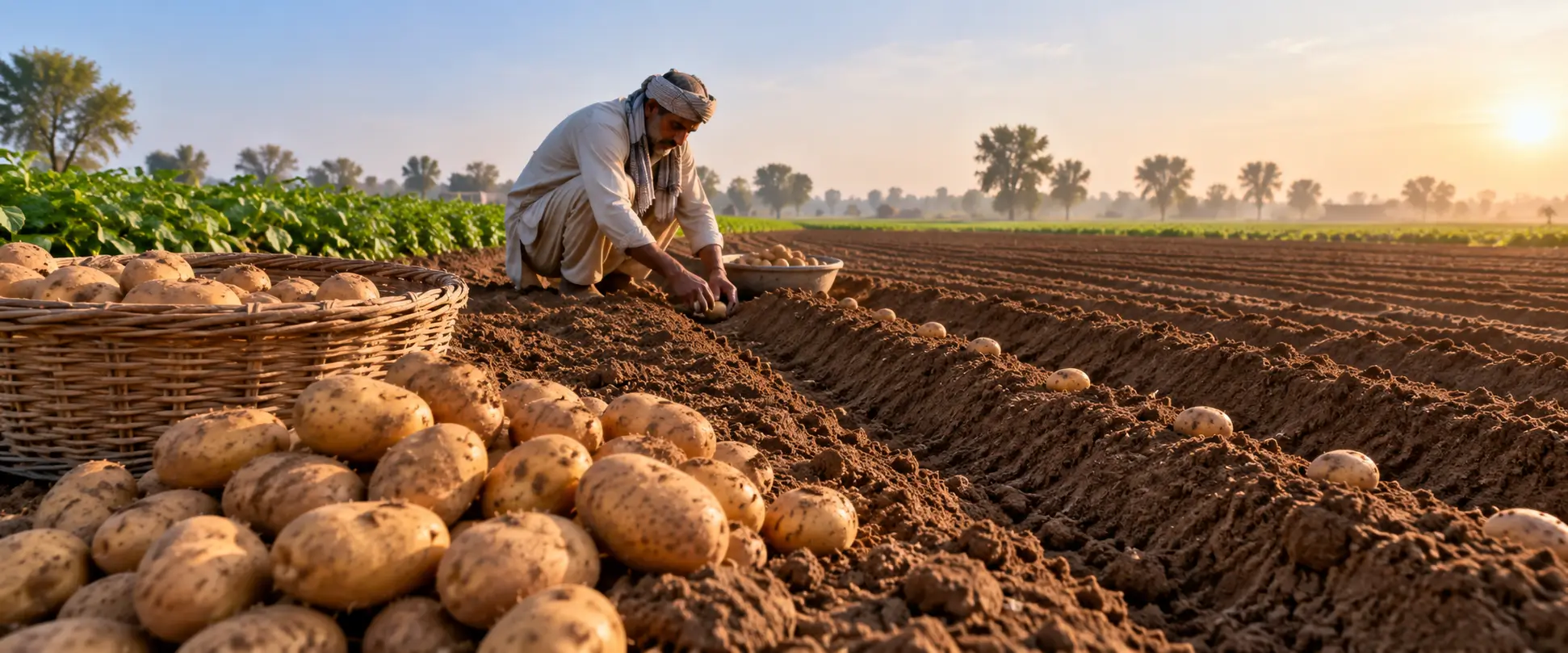
Potato is one of the most important vegetable crops grown in Pakistan, especially across Punjab. As the autumn potato planting season approaches, farmers are preparing their fields and looking for reliable potato seed that can support healthy crop establishment and strong production potential.
But choosing potato seed is not simply about finding the cheapest option or selecting a variety because it is popular in another area. Seed quality, variety selection, planting time, soil condition, irrigation, seed handling and crop management all influence how the crop performs.
For farmers preparing for the new season, this guide explains how to choose quality agricultural seed, prepare the field, plan potato planting and manage the crop more effectively.
Why Potato Seed Quality Matters
A successful potato crop starts with suitable planting material. Healthy and properly handled seed can support better germination, more uniform plant establishment and stronger early crop growth. Poor-quality or improperly stored seed can lead to uneven emergence and weak crop development.
Farmers should therefore consider the seed source, variety, physical condition, storage history and suitability for their area before making a purchase. Seed selection should always be connected with the actual conditions of the farm rather than based only on price or brand name.
Farmers preparing for the coming season can also explore Mehar Agro’s agricultural seed and farming solutions and discuss their requirements according to crop, season and field conditions.
Potato Sowing Time in Pakistan
For the autumn potato crop in Punjab, October is an important planting period. The exact planting date, however, can vary according to the district, weather, soil condition, field preparation and selected variety.
Farmers should avoid treating one calendar date as suitable for every farm. Local temperature, soil moisture, irrigation availability and field readiness should be considered before planting.
Planning the planting window in advance also gives farmers enough time to source suitable seed, prepare the field and organise irrigation before the crop is planted.
How to Choose the Best Potato Seed
There is no single potato variety that can be called the best for every farmer in Pakistan. The right choice depends on the purpose of the crop and the conditions in which it will be grown.
Local climate and growing conditions
Soil type and field condition
Irrigation availability
Planting date
Expected maturity period
Market requirements
Variety characteristics
Seed quality and source
Previous crop
Local farming conditions
A variety that performs well in one district may not necessarily produce the same result in another. Farmers should therefore focus on suitable, quality potato seed rather than simply choosing the cheapest seed or copying another farmer’s variety without considering local conditions.
Before purchasing seed, farmers can use Mehar Agro’s Seed Selection and Sowing Support to consider crop suitability, planting requirements, field conditions and water availability.
Potato Varieties in Punjab
Punjab has a wide range of potato-growing areas, and farmers may select different varieties according to their location, planting window and intended market. Varieties differ in maturity, skin colour, production characteristics, processing suitability and tolerance to particular environmental or disease stresses.
Farmers should not assume that one variety will perform equally well in every district. Variety selection should be connected with local recommendations, seed quality, planting conditions and the intended end use.
What Makes Quality Potato Seed?
Before purchasing potato seed, farmers should carefully evaluate both the seed itself and its source. Good planting material should be properly handled and stored and should not show obvious signs of severe damage, rotting or deterioration.
What variety is the seed?
Where did the seed come from?
How was it stored before sale?
Is the seed suitable for the local planting area?
Is the seed reasonably uniform in size and condition?
Is it suitable for the planned planting window?
Reliable sourcing becomes particularly important for commercial potato production because poor planting material can increase crop risk before the farmer has even started field management.
Preparing the Field for Potato Farming
Potato production starts before the seed reaches the field. Proper field preparation helps create suitable conditions for root growth and tuber development. Soil condition, moisture, drainage and field leveling should all be considered before planting.
Soil moisture and field readiness
Field leveling
Drainage
Soil condition and structure
Previous crop and residues
Weed pressure
Irrigation availability
Expected planting date
Farmers who want practical support before planting can also explore Mehar Agro’s agriculture advisory services for crop planning, seed selection and sowing-related decisions.
Potato Seed Size and Plant Establishment
Seed size, spacing and planting depth should be selected according to the variety, seed type, soil and local recommendations. Uniform planting can help create a more consistent crop stand.
Farmers should avoid applying a generic seed-rate or spacing recommendation without considering the actual seed size and field conditions. The planting plan should take into account variety, seed size, soil type, irrigation, planting method and the intended market.
Irrigation Management for Potato Crop
Water management is another important part of potato farming. Both insufficient and excessive irrigation can create problems. Water stress can affect crop development, while excessive moisture and poor drainage can create an unsuitable environment for roots and tubers.
Instead of following a fixed irrigation schedule throughout the season, farmers should consider soil moisture, crop growth stage, rainfall, weather, soil type and drainage conditions before irrigating.
For broader weather-aware farm planning, farmers can also use Mehar Agro’s weather and farm risk guidance when making irrigation and other field-operation decisions.
Potato Crop Health and Disease Monitoring
Regular field monitoring is essential throughout the potato growing season. Farmers should inspect different parts of the field rather than relying only on what is visible from the edge.
Uneven plant growth
Yellowing leaves
Leaf spots
Wilting
Insect activity
Poor plant development
Waterlogging
Unusual crop patches
A visible symptom does not always identify the exact cause. Yellowing, wilting or poor growth can be associated with different factors, including water stress, nutrition, insects, disease or environmental conditions.
When a potato crop develops unusual symptoms, Mehar Agro’s Crop Health and Pest Advisory can help farmers review crop stage, field history, irrigation, weather and visible symptoms before deciding on practical next steps.
Common Potato Farming Mistakes
Choosing Seed Only by Price
The cheapest seed is not always the most economical choice. Farmers should consider quality, variety, suitability and source before purchasing.
Selecting a Variety Without Considering the Area
A variety should be selected according to local conditions, planting time, irrigation and market requirements.
Ignoring Seed Storage
Poor storage and handling can affect seed quality. Farmers should understand how planting material has been stored before purchasing it.
Planting Without Proper Field Preparation
Poor soil condition, uneven moisture and drainage problems can affect early crop establishment.
Over-Irrigating
More water does not automatically mean better crop growth. Irrigation should be adjusted according to actual field conditions.
Spraying Without Identifying the Problem
Different crop problems can produce similar symptoms. Farmers should identify the likely cause before selecting an agricultural input.
How to Improve Potato Production
Improving potato production does not depend on one seed, fertilizer or agricultural product. It is the result of several farming decisions working together.
Select suitable and quality potato seed.
Choose the variety according to local conditions.
Plant within the appropriate local planting window.
Prepare and level the field properly.
Maintain suitable soil moisture.
Ensure proper drainage.
Monitor the crop regularly.
Manage weeds, insects and diseases responsibly.
Adjust irrigation according to crop and weather conditions.
Keep basic records of seed, planting, irrigation and crop-management activities.
Keeping simple farm records can help farmers understand which practices worked well and which decisions should be improved in the next season.
Farmers can also explore Mehar Agro’s Punjab crop planning guide for additional seasonal crop-planning information.
Why Buy Potato Seed From a Reliable Source?
Potato seed is the foundation of the crop, so its source matters. Before purchasing seed, farmers should understand the variety, source, storage history, physical condition and suitability for their farm.
A reliable agricultural seed supplier can also help farmers understand the practical requirements associated with planting and early crop establishment. The goal should be to match the seed with the farm, not simply to select a product because it is widely advertised.
Mehar Agro provides quality-focused agricultural seed options and practical farmer support based on crop, season, field conditions, water availability and intended use.
Potato Farming in Punjab: A Complete Approach
Successful potato farming requires decisions at every stage of the crop cycle. It starts with selecting suitable planting material and continues through field preparation, planting, irrigation, crop monitoring and harvest planning.
Agricultural conditions can vary significantly from one district to another. Soil, weather, water availability, previous crop and market requirements can all influence the final result. This is why a field-specific approach is generally more useful than following one fixed farming formula.
For farmers who want to understand how Mehar Agro approaches local farm decisions, the Mehar Agro agriculture support approach is based on season, field condition, water access, crop history and practical farm requirements.